
Southeast Building Consultants, LLC, is highly trusted with over 22 years’ experience and thousands of commercial inspections. Offering the best Commercial Property Condition Assessments in Georgia, Alabama, Tennessee, North Carolina & Surrounding States.
At Southeast Building Consultants, LLC, we provide professional Property Condition Assessments (PCAs) for commercial and industrial properties throughout Georgia, Alabama, Tennessee, North Carolina, and surrounding Southeastern states. Our services are tailored to the property's characteristics and the client's specific due diligence requirements.
We perform Property Condition Assessments utilizing the ASTM E2018-24 Standard Guide for Property Condition Assessments: Baseline Property Condition Assessment Process.
Our assessments help commercial property buyers, investors, lenders, brokerage firms, real estate advisors, owners, landlords, tenants, and asset managers identify material physical deficiencies, evaluate deferred maintenance, identify potential risks and better understand anticipated repair costs so they can make educated, informed decisions.
What Is a Property Condition Assessment (PCA)?
A Property Condition Assessment (PCA) is a professional evaluation by a qualified consultant of the observable physical condition for a commercial property, including its major building systems, building components and site improvements.
A PCA generally involves an on-site walk-through survey, review of available property documentation, interviews with knowledgeable individuals, and the preparation of a comprehensive Property Condition Report (PCR).
The primary purpose of a PCA is to identify and communicate material physical deficiencies, deferred maintenance concerns, and potential repair or replacement expenses.
Unlike a technically exhaustive engineering investigation, a baseline PCA is primarily a non-invasive, visual assessment designed to provide practical information about a property's physical condition.
For our clients, this information can be valuable when evaluating financial risks, negotiating transactions, planning improvements, and making informed real estate decisions.
When Do You Need a Property Condition Assessment?
PCAs are commonly requested during commercial real estate transactions, financing arrangements, and property management planning.
Common Reasons for Obtaining a PCA
- Pre-Acquisition Due Diligence: Evaluate the physical condition of a commercial property before completing a purchase and identify potential repair or replacement costs.
- Commercial Lending Requirements: Meet applicable lender due diligence requirements when obtaining a commercial mortgage, refinancing an existing property, or arranging construction financing.
- SBA 7(a) and 504 Financing: Provide property condition information when required by the lender or applicable financing arrangements involving commercial real estate.
- Commercial Real Estate Portfolio Acquisitions: Establish baseline property conditions for real estate investment trusts (REITs), investment funds, and portfolio acquisitions.
- Capital Reserve & Asset Management Planning: Identify deferred maintenance and anticipated capital expenditures to assist with budgeting, capital planning, and property management.
- Commercial Lease Commencement & Expiration: Document existing property conditions to help landlords and tenants evaluate maintenance responsibilities, pre-existing deficiencies, and potential capital expenditures.
- Pre-Listing & Seller Due Diligence: Identify and address property condition concerns before listing a commercial property, supporting more informed pricing and reducing unexpected repair negotiations.
- Insurance Underwriting & Risk Assessment: Provide information about the property's physical condition to assist with insurance underwriting and risk evaluation.
- A PCA can be beneficial even when one is not required by a lender or transaction: Understanding the property's condition before making a major financial commitment can help reduce uncertainty and improve long-term planning.
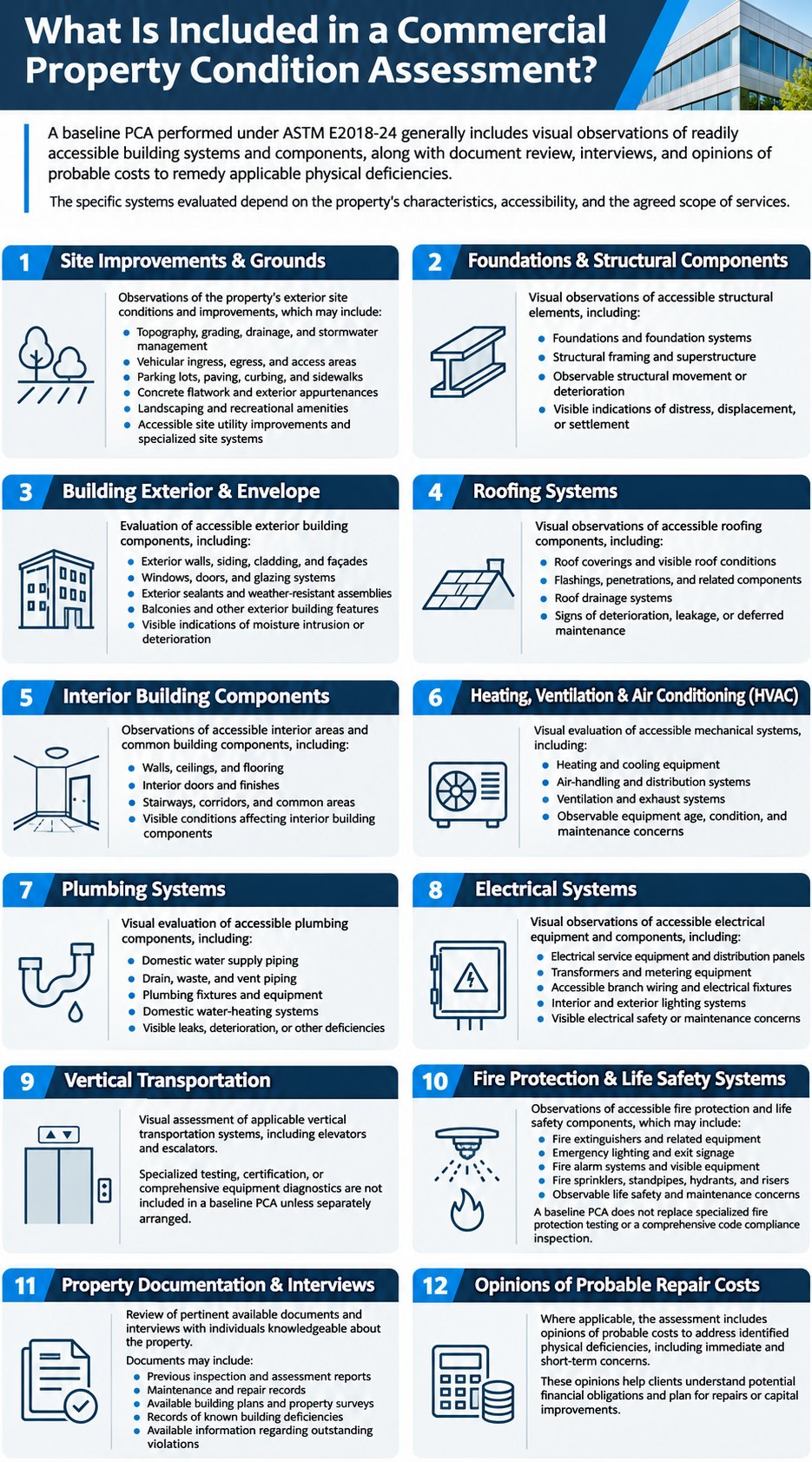
What Is Included in a Commercial Property Condition Assessment?
A baseline PCA performed under ASTM E2018-24 generally includes visual observations of readily accessible building systems and components, along with document review, interviews, and opinions of probable costs to remedy applicable physical deficiencies.
The specific systems evaluated depend on the property's characteristics, accessibility, and the agreed scope of services.
1. Site Improvements & Grounds
Observations of the property's exterior site conditions and improvements, which may include:
- Topography, grading, drainage, and stormwater management
- Vehicular ingress, egress, and access areas
- Parking lots, paving, curbing, and sidewalks
- Concrete flatwork and exterior appurtenances
- Landscaping and recreational amenities
- Accessible site utility improvements and specialized site systems
2. Foundations & Structural Components
Visual observations of accessible structural elements, including:
- Foundations and foundation systems
- Structural framing and superstructure
- Observable structural movement or deterioration
- Visible indications of distress, displacement, or settlement
3. Building Exterior & Envelope
Evaluation of accessible exterior building components, including:
- Exterior walls, siding, cladding, and façades
- Windows, doors, and glazing systems
- Exterior sealants and weather-resistant assemblies
- Balconies and other exterior building features
- Visible indications of moisture intrusion or deterioration
4. Roofing Systems
Visual observations of accessible roofing components, including:
- Roof coverings and visible roof conditions
- Flashings, penetrations, and related components
- Roof drainage systems
- Signs of deterioration, leakage, or deferred maintenance
5. Interior Building Components
Observations of accessible interior areas and common building components, including:
- Walls, ceilings, and flooring
- Interior doors and finishes
- Stairways, corridors, and common areas
- Visible conditions affecting interior building components
6. Heating, Ventilation & Air Conditioning (HVAC)
Visual evaluation of accessible mechanical systems, including:
- Heating and cooling equipment
- Air-handling and distribution systems
- Ventilation and exhaust systems
- Observable equipment age, condition, and maintenance concerns
7. Plumbing Systems
Visual evaluation of accessible plumbing components, including:
- Domestic water supply piping
- Drain, waste, and vent piping
- Plumbing fixtures and equipment
- Domestic water-heating systems
- Visible leaks, deterioration, or other deficiencies
8. Electrical Systems
Visual observations of accessible electrical equipment and components, including:
- Electrical service equipment and distribution panels
- Transformers and metering equipment
- Accessible branch wiring and electrical fixtures
- Interior and exterior lighting systems
- Visible electrical safety or maintenance concerns
9. Vertical Transportation
Visual assessment of applicable vertical transportation systems, including elevators and escalators.
Specialized testing, certification, or comprehensive equipment diagnostics are not included in a baseline PCA unless separately arranged.
10. Fire Protection & Life Safety Systems
Observations of accessible fire protection and life safety components, which may include:
- Fire extinguishers and related equipment
- Emergency lighting and exit signage
- Fire alarm systems and visible equipment
- Fire sprinklers, standpipes, hydrants, and risers
- Observable life safety and maintenance concerns
A baseline PCA does not replace specialized fire protection testing or a comprehensive code compliance inspection.
11. Property Documentation & Interviews
Review of pertinent available documents and interviews with individuals knowledgeable about the property.
Documents may include:
- Previous inspection and assessment reports
- Maintenance and repair records
- Available building plans and property surveys
- Records of known building deficiencies
- Available information regarding outstanding violations
12. Opinions of Probable Repair Costs
Where applicable, the assessment includes opinions of probable costs to address identified physical deficiencies, including immediate and short-term concerns.
These opinions help clients understand potential financial obligations and plan for repairs or capital improvements.
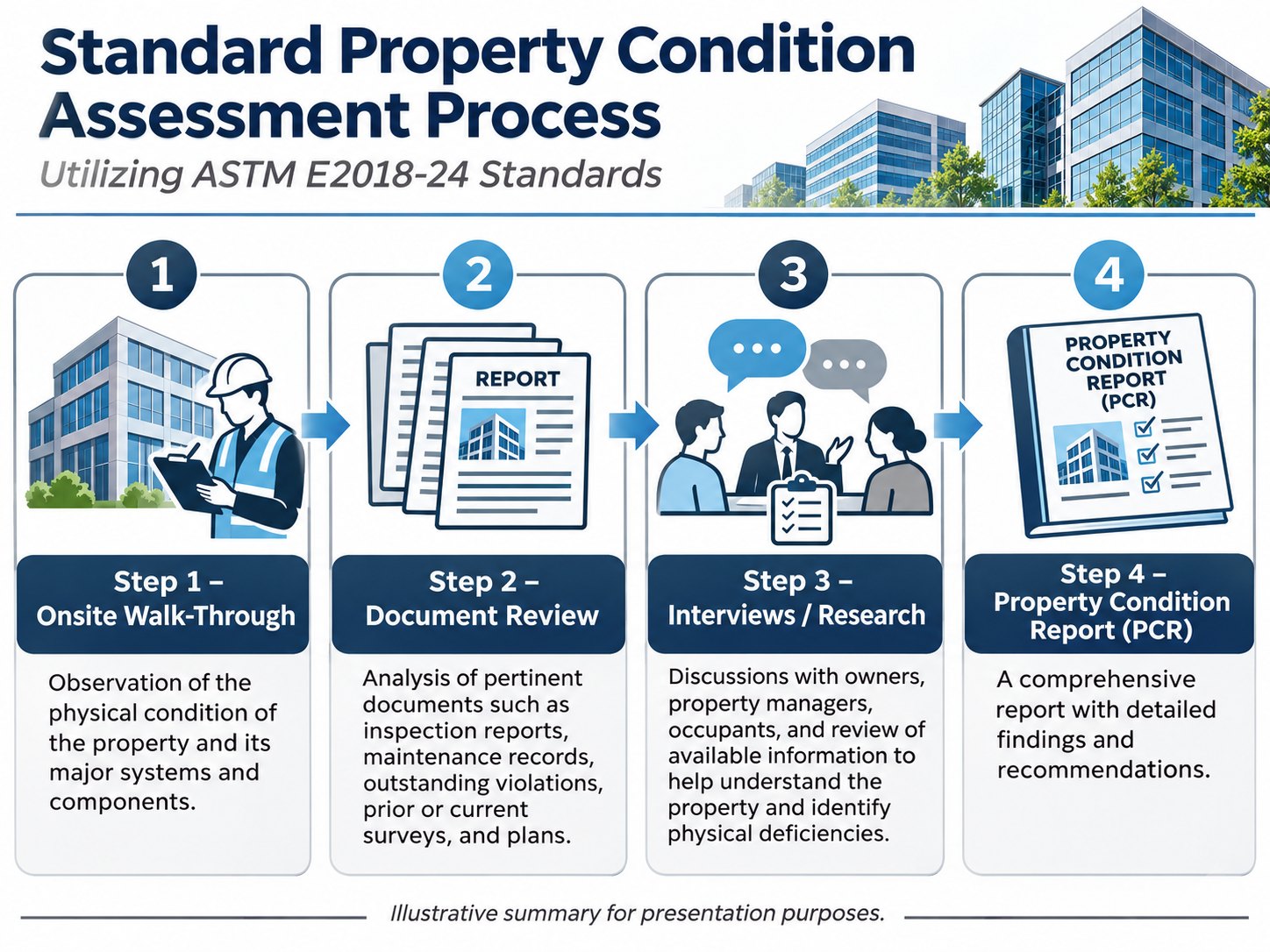
Our Four-Step Property Condition Assessment Process
Step 1 — On-Site Walk-Through Survey
We conduct a visual assessment of accessible areas of the commercial property, observing the physical condition of its major systems, components, and site improvements.
Step 2 — Document Review
We review pertinent available documents, including prior inspection reports, maintenance records, available property surveys and plans, and information regarding recorded material violations.
Step 3 — Pertinent Interviews
We conduct interviews with appropriate property representatives, such as owners, managers, or maintenance personnel, to obtain relevant information about the property's history, maintenance practices, and known conditions.
Step 4 — Property Condition Report (PCR)
We compile the assessment findings into a comprehensive written report that documents observed conditions, material physical deficiencies, applicable recommendations, and opinions of probable repair costs.
What Is Not Included in a Standard Property Condition Assessment?
A baseline PCA is a primarily visual, non-invasive assessment. It does not include technically exhaustive testing, destructive investigations, or every possible specialized evaluation.
Depending on the client's needs, additional assessments may be considered beyond the standard ASTM E2018-24 baseline scope.
Common out-of-scope considerations include:
- Structural Engineering & Specialized Analysis: Engineering calculations, load evaluations, structural design, or technically exhaustive investigations.
- Property Measurements: Detailed measurements or independent verification of building dimensions, areas, and quantities.
- Pest & Wood-Destroying Organism Inspections: Specialized inspections for termites, wood-destroying insects, or other organisms.
- Sanitary Sewer Camera Inspections: Underground drain and sewer video inspections.
- Thermal Imaging: Specialized infrared assessments of building systems or components.
- Environmental Assessments & Testing: Phase I Environmental Site Assessments and testing for mold, radon, asbestos, lead-based paint, or other hazardous materials.
- Building Energy Performance: Specialized energy efficiency assessments, energy audits, or detailed performance testing.
- Comprehensive Code Compliance: Detailed building, fire, zoning, or other regulatory compliance evaluations.
- Architectural & As-Built Plan Reviews: Detailed comparison of existing construction with plans, specifications, or architectural drawings.
- Accessibility Compliance Evaluations: Comprehensive evaluations for ADA, Fair Housing Act, or applicable state and local accessibility requirements.
- Alternative Standards & Specialized Protocols: Additional investigations performed under standards or protocols beyond the agreed baseline PCA scope.
Additional Assessments Based on Your Property's Needs
Every commercial property is unique. Depending on your property's age, construction, intended use, condition, and transaction requirements, additional investigations may be appropriate.
Southeast Building Consultants, LLC can help you determine whether additional out-of-scope services should be considered for your project.
The specific scope of each assessment is established in the agreed proposal and inspection agreement.
What Is a Property Condition Report (PCR)?
The final deliverable of a Property Condition Assessment is a Property Condition Report (PCR).
The PCR presents the findings of the assessment in an organized written format intended to help the client understand the property's observable physical condition and associated concerns.
A typical Property Condition Report may include:
- An executive summary of significant findings
- Property descriptions and general information
- Observations of major building systems and components
- Photographs documenting relevant conditions
- Findings from available document reviews and interviews
- Identification of material physical deficiencies and deferred maintenance
- Recommendations for repairs or additional evaluations
- Opinions of probable costs to remedy identified deficiencies
- Relevant limitations and supporting documentation
How Long Does It Take to Receive a PCA Report?
The on-site assessment may take anywhere from several hours to multiple days, depending on the property's size, complexity, accessibility, and number of buildings.
The final Property Condition Report is generally delivered electronically in PDF format.
Typical report completion is approximately 2–14 days, depending on property characteristics, the assessment scope, availability of necessary information, and any additional services requested.
Smaller properties with straightforward systems may require less time, while larger commercial or industrial properties may require more extensive evaluation and reporting.
Specific scheduling and anticipated report delivery are discussed during the proposal process.
Property Condition Assessments Based on Your Specific Needs
At Southeast Building Consultants, LLC, we understand that no two commercial properties—or clients—have exactly the same requirements.
An assessment for a small commercial office building may differ significantly from an evaluation of a large industrial facility, warehouse complex, or multifamily property.
Our goal is to provide clear communication, practical recommendations, and a properly defined scope of services based on your property's characteristics and your specific objectives.
Our Proposal & Scheduling Process
1. Initial Consultation
Contact us by phone or email to discuss your property, project timeline, assessment objectives, and any specific lender or transaction requirements.
2. Customized PCA Proposal
We provide a Property Condition Assessment Proposal and Agreement outlining the services to be performed, scope of work, pricing, terms, procedures, and scheduling availability.
3. Assessment Scheduling
Once the proposal is accepted, we coordinate scheduling and property access based on the agreed services and project requirements.
4. Detailed Reporting
Following completion of the assessment, we prepare and deliver the Property Condition Report in accordance with the agreed scope and schedule.
Our priority is to provide useful, objective information that helps you make informed decisions about your commercial real estate investment.
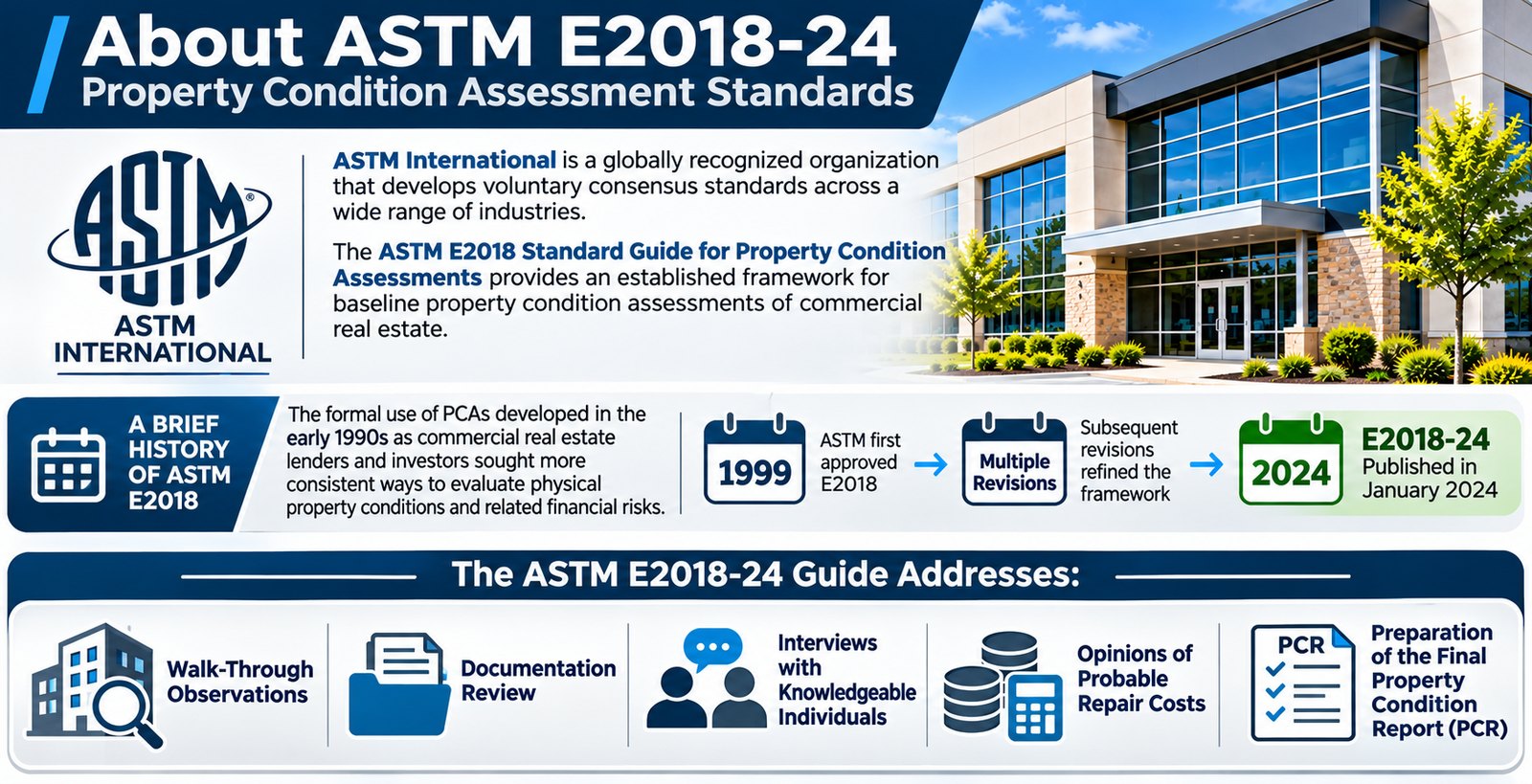
For more information, visit the ASTM International E2018-24 Standard Guide.
Frequently Asked Questions About Property Condition Assessments
What is a Property Condition Assessment (PCA)?
A Property Condition Assessment is a professional evaluation of the observable physical condition of a commercial property. It helps identify material physical deficiencies, deferred maintenance, and potential repair or replacement expenses.
What is the purpose of a PCA?
The purpose is to provide buyers, lenders, investors, and property owners with objective information about a property's physical condition so they can make informed financial, ownership, and management decisions.
Is a PCA the same as a residential home inspection?
No. Although both involve evaluating building conditions, a PCA is designed for commercial real estate and commonly follows the ASTM E2018 baseline assessment framework.
Who typically requests a Property Condition Assessment?
Commercial real estate buyers, lenders, investors, building owners, asset management firms, landlords, tenants, commercial real estate professionals, and property managers.
What building systems are assessed during a PCA?
A PCA typically evaluates accessible major building systems and components, including roofing, structural elements, building exteriors, interiors, HVAC, plumbing, electrical, site improvements, fire protection, life safety, and applicable vertical transportation systems.
The specific scope varies by property and the agreed assessment requirements.
How long does a Property Condition Assessment take?
The on-site walk-through may take several hours to multiple days, depending on the property's size and complexity. The final report is typically completed within approximately 2–14 days, depending on the scope of work and project requirements.
What standards are followed during a PCA conducted by Southeast Building Consultants, LLC?
Our baseline assessments utilize the ASTM E2018-24 Standard Guide for Property Condition Assessments, with the specific scope established in the agreed assessment proposal.
How can a PCA help save money?
A PCA may identify material deficiencies and deferred maintenance concerns before they result in unexpected expenses.
For buyers, the findings can provide useful information when negotiating a purchase price, requesting repairs, budgeting for improvements, or deciding whether to proceed with a transaction.
For existing owners, a PCA can support maintenance planning and future capital expenditure decisions.
Can a Property Condition Assessment identify every problem with a building?
No. A baseline PCA is a non-invasive visual assessment and is not intended to identify every concealed defect or condition.
Some concerns may require specialized testing, engineering evaluations, or additional investigation.
Can a PCA be customized for a specific property or lender?
Yes. The scope may be tailored to the property's characteristics, transaction requirements, and client's objectives. Additional services or enhanced due diligence investigations can be considered when appropriate.
Whether you're purchasing a commercial building, arranging financing, managing an existing asset, or evaluating potential capital expenditures, Southeast Building Consultants, LLC is here to help.
We understand the importance of receiving clear, practical information within your transaction or project timeline.